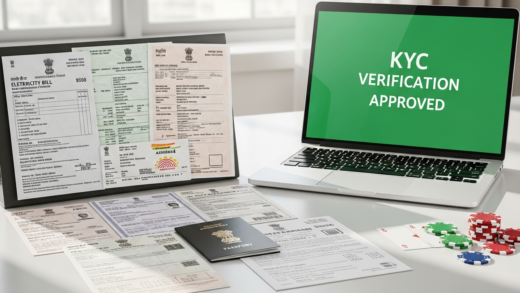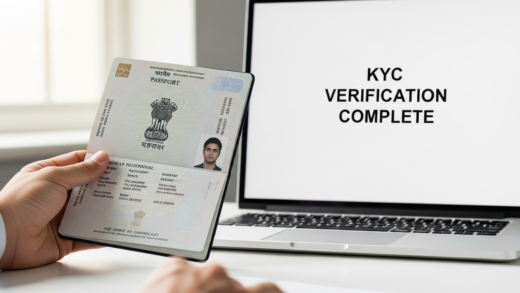
Indian betting sites operate within a complex regulatory landscape where identity verification and age confirmation are not optional—they are mandatory safeguards against fraud, money laundering, and underage gambling. If you’ve ever wondered why online betting platforms ask for so much personal information before you can place your first bet, the answer lies in Know Your Customer (KYC) requirements that govern the entire iGaming industry globally, and especially in India’s regulatory environment.
The Voter ID, or Electoral Photo Identity Card (EPIC), stands as one of India’s most widely recognized government-issued identification documents. With over 900 million registered voters in India, the Voter ID offers betting sites a familiar and accessible way to verify player identity and age. However, the Voter ID is just one piece of a broader KYC puzzle that may also include PAN (Permanent Account Number), Aadhaar, driving licences, and utility bills. This guide walks you through how Indian betting sites use Voter ID for KYC verification, where it fits among other documents, and practical steps to ensure a smooth, secure onboarding experience on compliant platforms.
Regulatory Background: Why KYC Is Mandatory on Indian Betting Sites
Core KYC and AML Objectives for Online Betting
KYC, or Know Your Customer, is a regulatory framework that requires financial service providers—including licensed betting operators—to verify the identity of their users before accepting deposits or processing withdrawals. In the context of online betting, KYC serves multiple critical functions: confirming that a customer is of legal age to gamble (typically 18 or older in most jurisdictions), preventing identity fraud and account takeover, screening customers against sanctions lists and politically exposed person (PEP) databases, and detecting money laundering and terrorist financing activity.
Anti-Money Laundering (AML) compliance goes hand-in-hand with KYC. While KYC establishes who a customer is at onboarding, AML monitoring tracks what they do with their account—how much they deposit, where funds originate, betting patterns, and withdrawal activity. Betting sites must flag suspicious transactions, large or unusual deposits, rapid fund movement, and other indicators that could suggest illicit use. Together, KYC and AML form the backbone of responsible gambling and financial crime prevention in iGaming.
Indian-Specific Rules on Age and Identity Verification
India does not have a single national law specifically regulating online sports betting or casino gambling. However, state-level regulations, the Public Gambling Act of 1867, and various state amendments prohibit certain forms of gambling and require strict age verification where gaming is permitted. Most licensed or internationally regulated Indian-facing betting sites—those based offshore but accepting Indian players—voluntarily implement KYC to comply with international standards and mitigate legal risk in major markets like the UK, Malta, and Gibraltar.
Under these voluntary frameworks and best-practice standards, Indian betting operators and their KYC partners require documentary proof of age and identity before account activation. The Voter ID is one of the government-issued documents most commonly accepted for this purpose. Operators also capture location data, often cross-referencing the address on the Voter ID against the player’s account registration and any available public records. Proof of source of funds—such as PAN, salary slips, or bank statements—may be requested to satisfy AML obligations.
Where Voter ID Fits in the KYC Document Mix in India
| Document type | Primary use in KYC | Strengths for betting sites | Limitations or gaps | Typical role alongside Voter ID |
|---|---|---|---|---|
| Voter ID (EPIC) | Age and identity proof | Widely available, photo ID, confirms age clearly, government-backed | Address may be outdated; lacks financial tracking; no biometric linkage | Primary or secondary ID for age/identity; paired with PAN for financial KYC |
| PAN | Financial tracking and AML | Links to ITR records; tracks income; mandatory for larger transactions; strong AML signal | Not a photo ID; does not confirm age on its own | Complements Voter ID for AML and source-of-funds verification |
| Aadhaar | Biometric identity and e-KYC | Unique, biometric-backed, linkable to multiple registries, enables video KYC | Privacy concerns for some users; geolocation data sensitivity; not universally linked to address | Preferred for video KYC and streamlined verification; alternative to Voter ID for digital-native players |
| Passport | International travel and high-value accounts | Strong identity proof, photo ID, recognized globally, preferred for high-risk or offshore funding scenarios | Less commonly held; processing may be slower; address updates inconsistent | Backup or upgrade ID for players with frequent international transactions |
| Driving Licence | Age and address proof | Photo ID, current address often updated by vehicle registration, widely available | Requires driving records; address updates slower than utility bills; not always accepted by international KYC vendors | Supplementary document for address proof; less prioritized than Voter ID in India |
Strengths and Weaknesses of Using Voter ID for KYC
The Voter ID is a compelling choice for Indian betting sites because it is a photo-bearing, government-issued document that explicitly certifies the holder’s age and citizenship. Most Indian adults hold a Voter ID or have easy access to one. The document is issued by the Election Commission of India, a highly trusted authority, which lends credibility to the verification process and reduces the perceived risk of forgery or tampering.
However, the Voter ID has notable limitations. The address recorded on the card may be several years out of date, especially if the holder has relocated. Unlike Aadhaar or modern utility bills, Voter ID does not automatically link to a registry of current addresses or financial records. For this reason, betting sites almost always pair Voter ID with additional documents—PAN for financial AML screening, or a utility bill (electricity, water, or gas statement) for address confirmation. The Voter ID alone, while sufficient for age and identity verification, is rarely the complete KYC solution.
How Indian Betting Sites Typically Use Government-Issued IDs
Standard KYC Flow From Registration to First Withdrawal
- Account creation and preliminary data entry: The player registers on the betting site, providing name, date of birth, email, phone number, and residential address. The site may apply soft checks (age calculation, basic format validation) but does not yet verify the data.
- Document upload (government-issued ID): Once registration is complete, the player is prompted to upload a government-issued photo ID. The player selects “Voter ID” from a dropdown menu and captures or scans both sides of the card, ensuring all text is legible and no corners are cropped.
- Selfie and biometric checks: The player takes a live selfie or, on more advanced platforms, completes a video KYC session where they hold the Voter ID next to their face, blink, and turn to prove liveness. This prevents identity fraud and deepfake attacks.
- Proof of address (if required): Depending on the operator’s risk model, the player may be asked to upload a recent utility bill, driving licence, or other document showing their current residential address. This is cross-checked against the Voter ID address and account registration.
- Automated and manual review: The KYC provider (often a third-party specialist like IDology, Jumio, or a local Indian firm) runs the documents through OCR (Optical Character Recognition), AI-powered fraud detection, and background database matching. If thresholds are met, a manual reviewer may inspect the documents and supporting data.
- Approval and account activation: If all checks pass, the account is marked as KYC-verified, and the player can deposit and place bets. Depending on the operator’s AML tier, higher withdrawal limits may require additional source-of-funds verification.
Partial, Soft, and Tiered KYC Models in iGaming
Not all betting sites demand full KYC upfront. Many use a tiered or “soft” KYC model, especially for low-risk scenarios. Under soft KYC, a player might be allowed to register and place small bets with minimal verification—perhaps just name, date of birth, and email confirmation. The Voter ID upload may be deferred until the player attempts to make a larger deposit, withdraw funds, or trigger an AML flag (such as a sudden large bet or rapid account activity).
This approach balances user friction (fewer hurdles at signup) with regulatory compliance (documents are requested once risk factors emerge). For Indian players, this means you might not need to submit your Voter ID immediately, but the site will request it if you reach certain thresholds. Operators use factors like deposit amount, cumulative betting volume, geographic location, device fingerprinting, and payment method to determine when enhanced KYC is needed.
Step-by-Step: Using Your Voter ID for KYC on Indian Betting Sites
Standard KYC Flow From Registration to First Withdrawal
- Create your account with accurate information: Register using your legal name (as it appears on the Voter ID), correct date of birth, and residential address. Any mismatch with your Voter ID will cause delays or rejection later.
- Navigate to the KYC or account verification section: Log in, go to “Account,” “Settings,” or “Verification,” and select “Upload ID” or “Complete KYC.” You will see a list of accepted documents.
- Select Voter ID as your document type: Choose “Voter ID” or “EPIC” from the dropdown menu. The platform will ask for front and back images, or a single unified scan.
- Scan or photograph both sides of your Voter ID: Ensure the image is in colour, well-lit, and sharp. Include the entire card—all corners, text, photo, and holograms must be visible. Avoid shadows, glare, or blur. File size is usually 5–10 MB per image; formats accepted are JPG, PNG, or PDF.
- Upload the images via the secure portal: Use the platform’s built-in file uploader (never email the document). Verify that the upload page uses HTTPS (look for the padlock icon in your browser). Once uploaded, you will see a confirmation message.
- Complete any secondary verification: The platform may ask for a selfie, a video selfie holding the Voter ID, or additional documents (PAN, address proof). Respond promptly with clear images.
- Wait for review and approval: The operator’s KYC team or third-party provider will review your documents, typically within 24–48 hours. You will receive an email notifying you of approval or requesting clarification.
Common Mistakes Players Make with Voter ID Uploads
- Blurry or out-of-focus images: The OCR and AI systems must be able to read all text clearly. Re-scan using a phone camera (not a scanned document that is further photographed) or a dedicated scanner for best results.
- Cropped edges or incomplete card: Include the entire Voter ID including all four corners, the holograms, and any security features. Partial images are rejected automatically.
- Mismatched name, spelling, or date of birth: Ensure your account registration name, spelling, and DOB match exactly with your Voter ID. Even minor variations (middle initial, hyphenation) can trigger manual review or rejection.
- Expired or tampered documents: While the Voter ID technically does not expire, if it is visibly damaged, worn, or shows signs of alteration, the system may flag it as suspicious.
- Submitting only one side: Always upload both the front (with photo and name) and back (with address and signature) unless the platform explicitly accepts a single page.
- Wrong file format or excessive file size: Stick to JPG or PNG; avoid BMP or TIFF. Keep files under 10 MB. Most platforms will reject or timeout on oversized uploads.
Voter ID vs PAN, Aadhaar and Other IDs for Betting KYC
| Document | Photo ID | Age proof reliability | Address linkage | Usage in AML checks | Best use case on betting sites |
|---|---|---|---|---|---|
| Voter ID | Yes | High; explicit age on card | Address on card, but often outdated | Secondary or supporting; not linked to financial records | Primary ID for age/identity; often paired with PAN for comprehensive KYC |
| PAN | No | Not designed for age proof; age inferred from ITR if filed | Linked to ITR if filed; otherwise not guaranteed | High; linked to income, tax compliance, and ITR records; strong AML signal | Secondary to Voter ID for age; primary for source-of-funds and financial AML screening |
| Aadhaar | Yes (biometric) | High; linked to demographic data at enrollment | Linked to Aadhaar registry; address data is current | High if integrated with banking; enables rapid AML cross-checks | Preferred for video KYC and streamlined e-verification; increasingly used for digital KYC in India |
| Passport | Yes | High; explicit DOB; includes nationality | International address or last known address; not always current | High for international travel and offshore fund sources; facilitates global AML screening | Best for high-value or international transactions; backup ID for players with overseas income |
| Driving Licence | Yes | Explicit DOB | Address via vehicle registration; updated less frequently than utility bills | Moderate; not linked to financial records; useful for location-based AML risk scoring | Supplementary address proof; less prioritized than Voter ID in India for betting KYC |
When Betting Sites Prefer PAN or Aadhaar Over Voter ID
Certain scenarios push betting operators to request PAN or Aadhaar instead of (or in addition to) Voter ID. If you are depositing above a threshold (often ₹1 lakh or higher), the operator may upgrade your KYC tier and request PAN to link your account to your Permanent Account Number for tax reporting and AML compliance. Higher withdrawal amounts, frequent large transactions, or account activity that triggers AML alerts will similarly prompt requests for PAN.
Aadhaar is increasingly preferred by Indian-based and internationally licensed Indian-facing platforms because it enables real-time biometric and demographic verification, direct linkage to banking and GSTIN registries, and seamless video KYC. If a betting site offers “Aadhaar-based e-KYC” or “Aadhaar video verification,” completing KYC with Aadhaar instead of Voter ID can significantly speed up approval and reduce friction, though it involves sharing your unique Aadhaar number.
Combining Voter ID With Other Documents for Smooth Verification
- Voter ID + PAN + Utility Bill: This is the “gold standard” combination. Voter ID confirms identity and age, PAN links to financial records for AML, and a recent utility bill (under three months old) provides current address proof. Most operators will approve this set within one business day.
- Voter ID + Aadhaar: If you prefer to avoid submitting PAN, Voter ID + Aadhaar covers identity, age, and biometric verification. However, note that Aadhaar-based KYC requires careful consent and privacy management; see the security section below.
- Voter ID + Bank Statement: If you do not have PAN or prefer not to share it, a recent bank statement (showing your name, account number, address, and recent transactions) can substitute for PAN to demonstrate source of funds and address.
- Voter ID + Driving Licence + Utility Bill: For players in states where driving licence is more current than Voter ID, this pairing covers identity, age, and address with two documents the operator can cross-verify.
Video KYC, AI, and OCR: Modern Ways to Verify Voter ID Online
Indian betting sites and their third-party KYC partners now routinely use Optical Character Recognition (OCR) to automatically extract data from Voter ID images—name, date of birth, voter ID number, and address are read directly by machine learning algorithms. This data is instantly cross-checked against the account registration, and the system flags any mismatches for manual review.
AI-powered fraud detection looks for signs of document tampering, forgery, or manipulation. The system may analyze pixel-level anomalies, check for consistent lighting and shadow patterns, and verify security features such as holograms and watermarks. If the AI confidence score is below a threshold, the document is sent to a human reviewer or rejected with a request for resubmission.
Video KYC has emerged as the fastest and most secure method for Voter ID verification. The player opens a live video session through the betting platform or a third-party KYC provider (such as DigiLocker or a licensed e-KYC vendor). They show the Voter ID to the camera, allow the system to photograph both sides, and complete a liveness check—blinking, turning, or speaking a phrase to confirm they are the cardholder. The entire process takes 2–5 minutes and produces a high-confidence match between the ID holder and the account owner.
Real-Time Verification of Voter ID with AI and Databases
Advanced KYC providers in India can now query electoral commission databases and AADHAR-linked public records in near real-time. When you submit your Voter ID, the OCR extracts your voter ID number, and the system pings electoral databases to confirm that the number is valid, the name matches, the age is correct, and no duplicate registrations exist under that ID across other betting accounts (fraud prevention).
If integrated with Aadhaar or bank APIs, the system can also verify your residential address in seconds and flag any geographic inconsistencies (for example, if you registered from Delhi but your Voter ID is from Mumbai, and your betting device is showing a VPN in another country). These real-time checks reduce approval times from hours or days to minutes, and they catch fraud much earlier.
However, this level of integration is currently limited to a subset of leading Indian-facing operators and depends on regulatory agreements with Indian government agencies. Most offshore-based betting sites still use slower, document-only KYC and manual review, so approval can take 24–72 hours even with clear Voter ID images.
Security and Privacy: Safe Ways to Share Voter ID With Betting Sites
Your Voter ID contains sensitive personal information—your full name, date of birth, address, and a unique voter ID number. Sharing it online carries inherent risk. Poorly secured betting sites, incompetent KYC providers, or malicious third parties could intercept, store unsafely, or sell this data. As an Indian player sending documents to offshore operators or international KYC vendors, you must take deliberate steps to minimize exposure.
Never email your Voter ID, WhatsApp it, or share it via unencrypted messaging. Do not upload documents to suspicious file-sharing sites, and do not use public or shared WiFi when submitting sensitive documents. Instead, use the betting site’s built-in secure upload form, verify the URL begins with HTTPS (not HTTP), and check for the padlock icon in your browser address bar. This encryption protects your data in transit.
Before uploading, research the betting site’s privacy policy and data retention practices. Reputable operators will state how long they retain KYC documents (often 3–7 years for regulatory compliance), who can access them (internal compliance and authorized law enforcement only), and whether they share data with third parties. If the privacy policy is vague, missing, or mentions selling data to advertisers, do not proceed.
Red Flags to Avoid When Sending Voter ID Online
- Requests for Voter ID via plain email or SMS: No legitimate betting site will ask you to email a copy of your ID or send it as an attachment. This is a phishing or fraud indicator.
- No HTTPS or security indicators on the upload page: If the KYC upload form does not display a secure padlock or use HTTPS encryption, assume your document will be transmitted in plain text and intercepted easily.
- Unclear or missing privacy policy: If the site does not clearly explain what happens to your Voter ID data, how long it is retained, and who has access, it is a red flag. Legitimate operators publish detailed privacy policies.
- Demands for multiple copies or re-uploads without explanation: Legitimate KYC requires one or two clear uploads. If a site repeatedly asks you to resubmit without clear feedback on what was wrong, it may be fishing for more data or running a scam.
- No licensing or regulatory information: Reputable betting sites display their license number, issuing jurisdiction (e.g., Malta Gaming Authority, UK Gambling Commission), and compliance certifications. The absence of this information suggests the operator may not be subject to oversight.
- Requests for additional sensitive information (bank details, passport number, mother’s maiden name) beyond what is needed for age and identity verification: While PAN and address documents are sometimes necessary, requests for full bank account numbers, passwords, or highly personal details are beyond standard KYC scope and suggest risk.
Best Practices for Protecting Your Identity and Account
Once your KYC is approved and your account is active, continued vigilance is essential. Use a strong, unique password for your betting account—at least 12 characters mixing uppercase, lowercase, numbers, and symbols. Do not reuse this password on other sites, especially not on shared devices or public computers.
Enable two-factor authentication (2FA) if the betting site offers it. Most reputable platforms now support 2FA via SMS, authenticator apps (Google Authenticator, Microsoft Authenticator), or email. This adds a second barrier if someone obtains your password.
Monitor your account activity regularly. Check your betting history, deposit and withdrawal logs, and any email notifications from the site. If you see unfamiliar activity, contact support immediately and change your password. Be cautious of unsolicited emails claiming to be from the betting site, especially those asking you to “confirm” or “re-verify” your information. Always log in directly via the official website or app, not via links in emails.
If you use a shared device, log out after every session and clear browser cookies and cache. Avoid leaving your account open unattended. Store your Voter ID securely—a photo on your phone is fine, but do not leave the physical card lying around or share it unnecessarily.
No-KYC and Crypto Betting Sites: Where Voter ID May Not Be Required
A minority of betting platforms—usually those targeting players in unregulated jurisdictions or using cryptocurrency as the primary payment method—operate with minimal or no KYC requirements. These “no-KYC” or “low-KYC” sportsbooks and casinos allow players to sign up, deposit, and place bets with only an email address and a username, without submitting any government-issued ID.
The appeal is obvious: no friction, no identity risk, instant account activation, and pseudonymity. However, the trade-offs are substantial. No-KYC sites are far more likely to be unlicensed, unregulated, and prone to fraud. They may not be subject to any independent auditing, fair play verification, or responsible gambling safeguards. If you lose money or suspect the site is cheating, you have little recourse because the operator is not answerable to any gaming regulator.
Crypto betting sites, which accept Bitcoin, Ethereum, or stablecoins like USDC, often exploit regulatory gray zones and avoid Voter ID KYC to appeal to privacy-conscious bettors. While some crypto sportsbooks are legitimate and regulated, others are outright scams or vehicles for money laundering. Additionally, cryptocurrency deposits are often irreversible; if you send funds to the wrong address or to a fraudulent site, recovery is nearly impossible.
| Site type | KYC requirement | Use of Voter ID | Deposit/withdrawal limits | Main payment methods | Key risks for Indian players |
|---|---|---|---|---|---|
| Licensed sportsbook (UK/Malta) | Full KYC at signup or before withdrawal | Required; Voter ID often primary document | High limits (₹50,000+ daily or more) | Bank transfer, credit/debit card, e-wallets | Minimal if site is regulated; some restrict Indian IPs |
| Low-KYC sportsbook | Partial KYC; requested only at higher tiers | May accept no ID for small bets; Voter ID required for large withdrawals | Medium limits (₹5,000–₹20,000 daily) initially, increasing with KYC | Credit card, e-wallet, local payment gateway | Moderate risk; less consumer protection; may impose limits unexpectedly |
| No-KYC sportsbook | None; email and username only | Not required | Low to very low (₹1,000–₹5,000 daily) or none; cumulative limits over time | Cryptocurrency, anonymous e-wallets, gift cards | High risk; likely unlicensed; no regulatory recourse; prone to account seizure or theft |
| Crypto-exclusive sportsbook | Optional or light KYC | Usually not required; some ask for Voter ID once limits are exceeded | Very high limits in crypto terms; low in fiat conversion | Bitcoin, Ethereum, stablecoins | Very high risk; irreversible deposits; volatile exchange rates; regulatory uncertainty in India |
Risk-Benefit Trade-Offs of Avoiding Voter ID Verification
The primary benefit of skipping Voter ID KYC is speed and privacy. You can create an account and start betting in minutes without revealing your identity, address, or age (though you still must state you are 18+). For players concerned about data breaches, government surveillance, or unwanted gambling advertisements, no-KYC sites offer a veneer of anonymity.
However, the costs heavily outweigh these benefits for most Indian players. First, no-KYC sites typically impose strict deposit and withdrawal limits. You might be able to deposit ₹5,000 per day, but withdrawals are capped at ₹2,000, and you cannot increase limits without eventually submitting ID anyway. Second, without KYC, you have no consumer protection. If the site disappears with your funds, there is no regulator to complain to and no insurance scheme to recover losses. Third, future account restrictions are likely; once no-KYC sites grow large, they often suddenly demand full KYC from all players, freezing accounts until documents are submitted. At that point, you are forced to comply or lose your balance.
Finally, using a no-KYC site does not guarantee anonymity. Law enforcement, tax authorities, and betting regulators worldwide increasingly demand records from all gambling operators, KYC-ed or not. India’s income tax department has also begun pursuing bettors who use offshore sites, and the lack of a Voter ID submission does not protect you if transactions are traced through your bank or payment gateway.
Troubleshooting Voter ID-Based KYC: Delays, Rejections, and Escalations
KYC verification usually takes 24–48 hours, but delays are common. You might receive an email saying your Voter ID was “under review” and asking you to wait. After 72 hours with no update, you have reason to follow up. Rejections, while less common on major platforms, do happen—usually due to document quality issues, data mismatches, or fraud flags.
Typical Reasons KYC Fails When Using Voter ID
The most common reason for rejection is a mismatch between your account registration data and the information on your Voter ID. If you registered as “Rajesh Kumar” but your Voter ID says “Rajesh K. Sharma,” or if your birthdate is off by a day, the automated system will flag it. Blurry images, cropped corners, or lighting issues prevent OCR from reading the text clearly, and the document is rejected with a request to resubmit.
Less commonly, your KYC may be rejected due to suspected fraud. This could be triggered by a flagged address (e.g., the address on your Voter ID is associated with multiple betting accounts), device inconsistencies (you registered from an IP in the UK but your Voter ID is from Kerala), or a mismatch between your account age and your stated date of birth. Age conflicts—where the system calculates you are 15 based on your stated DOB but your Voter ID shows you are 25—are red flags for account takeover or identity fraud.
Escalation Paths: From Chat Support to Compliance Teams
- Step 1: Contacting support via live chat or email: If your KYC is stuck or rejected, reach out to the site’s customer support team. Provide your account ID (usually a username or account number), and ask for a specific reason for the delay or rejection. Be polite and patient; support staff may have limited visibility into compliance decisions.
- Step 2: Resubmitting documents with clarification: If support advises resubmission, ask exactly what is wrong with your current documents. If the image was blurry, take a new photo in brighter light. If data mismatched, correct your account information (if the system allows) or note the discrepancy in an email to support explaining that your Voter ID address is outdated but matches your Electoral Commission records.
- Step 3: Requesting escalation to the compliance team: If the issue persists after resubmission, ask support to escalate your case to the compliance or KYC team. Provide your account ID, the dates you submitted documents, and a brief summary of the issue (e.g., “Documents rejected as ‘unclear’; resubmitted clearer images on [date]; still under review for 5 days”).
- Step 4: Offering alternative documents: If the compliance team continues to reject your Voter ID, ask if you can submit PAN, Aadhaar, or a passport instead. Many teams will accept an alternative government-issued ID, especially if it has been recently updated and is clearer.
- Step 5: Contacting the operator’s licensing authority: If the site claims to be licensed (e.g., by Malta Gaming Authority or UK Gambling Commission), and they are not responding to your complaints, file a formal complaint with the regulator. Include all communications, documents submitted, and details of the delay. Regulators take KYC delays seriously because they suggest potential fraud or compliance failures.
Strategic Tips for Indian Bettors: Choosing IDs and Sites for Smooth KYC
| Strategy | Use of Voter ID | Complementary documents | Impact on verification speed | Suitability for high-volume bettors |
|---|---|---|---|---|
| Conservative (single licensed site) | Voter ID as primary; supplemented with PAN + utility bill | PAN (3–6 months old), utility bill (under 3 months), recent bank statement | 24–48 hours typically; up to 5 days for manual review | Good; full KYC opens all deposit/withdrawal limits |
| Portfolio approach (multiple platforms) | Voter ID on primary account; Aadhaar on secondary accounts to diversify risk | Voter ID + PAN on main account; Voter ID + Aadhaar on secondary | Variable; Aadhaar e-KYC faster (1–2 hours) | Moderate; multiple accounts may trigger fraud flags if deposits come from same source |
| Crypto-heavy (betting on multiple chains) | Avoid on crypto-exclusive sites; use on regulated fiat ramps | Voter ID + PAN on fiat deposit/withdrawal points; minimal on crypto exchanges | Fiat on/off-ramps: 24–48 hours; crypto transfers: instant | Poor; crypto volatility and lack of KYC make audit trails complex |
| Emerging market explorer | Voter ID on regional operators (e.g., India-based or licensed in smaller jurisdictions) | Voter ID + local address proof (e.g., rent agreement, mobile bill) | Often slower (3–7 days) due to smaller KYC teams | Low; smaller operators have less sophisticated fraud monitoring |
| Minimalist (lowest friction) | Voter ID only if required; prefer soft KYC sites initially | Only utility bill if address is questioned | Hours to minutes if soft KYC accepted; 24–48 hours once full KYC is triggered | Moderate; works for casual bettors but risky for frequent play |
Building a Document Set That Rarely Fails KYC
- Keep digital copies of all documents updated: Maintain clear, recent scans of your Voter ID (both sides), PAN card, Aadhaar card (front and back; consider blurring your Aadhaar number if storing in the cloud), passport, and driving licence. Store them in a secure cloud folder (Google Drive with password protection, Sync.com, or a password manager like Bitwarden) so you can quickly retrieve them if a new betting site requests KYC.
- Ensure your utility bill is current: A recent electricity, water, or gas bill (issued within the past 3 months) is gold-standard proof of address. Keep a PDF copy of your latest bill on hand. If you have just moved, update your address with your utility provider before signing up on betting sites.
- Match all account registrations to your Voter ID exactly: When creating an account, use the exact spelling of your name, address, and date of birth as they appear on your Voter ID. Do not use nicknames, middle initials inconsistently, or abbreviated addresses. Any variance will trigger manual review or rejection.
- Keep bank statements or salary slips for source-of-funds verification: If you anticipate higher deposits or withdrawals, have a recent bank statement (showing account name, number, address) or salary slip ready. These documents prove the source of your betting funds and satisfy AML obligations.
- Test your scans on a laptop screen before uploading: Many rejections are due to image quality issues you cannot see on a phone. Before uploading to a betting site, open the image file on a laptop, zoom to 200%, and verify that all text is sharp, all corners are included, and there are no shadows or glare.
Using your Voter ID for KYC on Indian betting sites is standard practice and, when done correctly, a straightforward process. The Voter ID proves your identity and age, but it is most effective when combined with PAN for financial AML checks and a utility bill for address verification. By understanding the regulatory context, knowing the strengths and limitations of Voter ID compared to other documents, and following best practices for secure document submission and account protection, you can complete KYC quickly and safely on reputable betting platforms. Whether you are a casual bettor or an active player, a proactive approach to KYC—keeping documents current, using licensed operators, and monitoring your account—ensures compliance, protects your identity, and gives you access to the full range of features and withdrawal limits that licensed betting sites offer.