Live Money Wheel games have become a staple in the Indian online casino landscape, attracting players who enjoy simple mechanics, rapid gameplay, and the entertainment value of spinning for potentially large payouts. Whether you’re considering a physical Money Wheel table at a tribal casino or exploring live game-show wheel variants like Dream Catcher and Crazy Time through offshore platforms, understanding the underlying odds and payout structures is essential for managing expectations and making informed betting decisions. This guide unpacks the rules, segment probabilities, RTP figures, and house edge mechanics across standard Money Wheel and popular live wheel game shows accessible to Indian players. We’ll also contrast physical Indian casinos with regulated online studios, examine how these games compare mathematically to other live casino options, and provide practical bankroll strategies tailored to the Indian gambling market.
Importantly, this is not a strategy guide aimed at beating the wheel—such systems do not exist for fixed-odds games. Rather, we focus on how understanding the mathematics helps you manage your bankroll responsibly and approach these games as entertainment investments rather than profit opportunities.
How Live Money Wheel Games Work in Indian Casinos
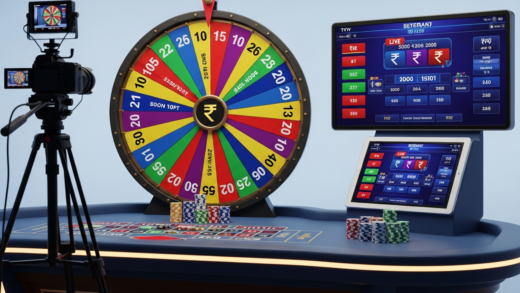
A Money Wheel, also called Big Six, is an upright vertical wheel divided into numbered or symbol-based segments. Before each spin, players place wagers on the segment they believe will land when the wheel stops. A dealer or automated mechanism spins the wheel, and the outcome—the segment the pointer stops on—determines the winners and payouts. The simplicity of this mechanic makes it accessible to newcomers, though the underlying probability and payout structure are what drive the house edge.
Money Wheels are present in two main contexts for Indian players. On-shore casinos in specific Indian states (such as Goa) and tribal gaming venues offer physical Money Wheel tables where players can observe the mechanical wheel in real time and interact with dealers. Concurrently, online casinos targeting Indian players host live-dealer versions and modern game-show wheel variants broadcast from professional studios operated by providers like Evolution and Playtech. These online versions use certified random number generators (RNGs) or maintain mechanical wheels in regulated environments, ensuring fair, independent outcomes for each spin.
The odds differ significantly across wheel segments because some numbers occupy more of the wheel’s circumference than others. For example, the segment labeled “1” might cover 25% of the wheel, while the segment labeled “20” might cover only 2–3%. Payouts are typically structured proportionally—lower-probability segments offer higher odds (e.g., 20:1 or 40:1), while high-probability segments offer lower odds (e.g., 1:1 or 2:1). However, this apparent balance is where the house edge is constructed: the payout odds never quite match the true mathematical probability, ensuring the casino retains a percentage of all wagers long term.
Physical Casino vs Live Online Wheels for Indian Players
The experience of playing Money Wheel at a physical tribal casino differs markedly from joining a live-streamed game show wheel online. In a physical venue, you observe the mechanical wheel directly, interact face-to-face with dealers, and benefit from the immediacy of in-person gaming. In contrast, online live-dealer games feature professional studios with HD video feeds, interactive chat features, and a more polished presentation reminiscent of television game shows.
A critical distinction lies in RTP (Return to Player) transparency. Offshore-licensed live casino providers publishing games under MGA (Malta Gaming Authority) or UKGC (United Kingdom Gambling Commission) licenses typically disclose theoretical RTP percentages in game rules and information panels. In contrast, many Indian land-based and tribal casinos do not publish exact payback percentages for individual games, making precise odds comparison difficult. This transparency gap has led many Indian players to prefer regulated online platforms where mathematical details are readily available.
Key Concepts: Payouts, Probability, RTP and House Edge
Understanding four interconnected concepts is essential to evaluating Money Wheel odds:
Payout odds express how much you win relative to your stake. A payout of 5:1 means a ₹100 bet returns ₹500 profit (plus your original stake).
Hit probability is the likelihood that a specific segment lands on any given spin. If a segment occupies 10% of the wheel, its probability is roughly 10%.
Return to Player (RTP) is the percentage of all wagered money a game returns to players over a very large sample of spins. An RTP of 95% means players can expect to recover ₹95 for every ₹100 wagered, on average, across thousands of spins.
House edge is simply 100% minus RTP. A 95% RTP game has a 5% house edge, meaning the casino expects to retain ₹5 from every ₹100 wagered.
The mismatch between payout odds and hit probability creates the house edge. If a segment lands 20% of the time but only pays 3:1, bettors making ₹100 wagers across 100 spins would collect 20 × ₹300 = ₹6,000 in profit, but stake ₹10,000 total—a net loss of ₹4,000, or 40% of the original investment. Later sections use detailed tables to show how this disparity manifests across different segments and games.
Standard Money Wheel (Big Six) Rules and Odds
A typical Money Wheel configuration consists of 52 segments divided among several denominations. The exact layout varies by casino, but a common example includes: 24 segments labeled “1”, 15 segments labeled “2”, 7 segments labeled “5”, 3 segments labeled “10”, 2 segments labeled “20”, and 1 segment with a Joker or special symbol. The payouts and approximate house edge for each segment are shown in the table below.
| Segment/Bet | Typical Payout | Approx. Share of Wheel | Hit Probability | Approx. House Edge Range |
|---|---|---|---|---|
| 1 | 1:1 | 46% (≈24 of 52) | ~46% | 11–13% |
| 2 | 2:1 | 29% (≈15 of 52) | ~29% | 12–14% |
| 5 | 5:1 | 13% (≈7 of 52) | ~13% | 11–15% |
| 10 | 10:1 | 6% (≈3 of 52) | ~6% | 11–16% |
| 20 | 20:1 | 4% (≈2 of 52) | ~4% | 13–18% |
| Joker | 40–45:1 | 2% (≈1 of 52) | ~2% | 15–22% |
These values are representative and may vary across casinos. Indian casinos often do not publish exact segment distributions, so players should request or carefully observe any posted pay table. The key takeaway is that Money Wheel typically carries a house edge of 10–20%, significantly higher than games like European roulette (2.7% house edge) or blackjack with basic strategy (under 1% house edge).
How Pay Tables Create the Money Wheel House Edge
To illustrate how the edge arises, consider the “1” segment. Suppose a ₹100 bet on “1” lands roughly 46 times per 100 spins (given it occupies ~46% of the wheel). Each win pays 1:1, so the player collects ₹100 in profit per ₹100 wagered. Over 100 spins, the player stakes ₹10,000 total and wins ₹4,600 in profit, netting ₹14,600 returned. The expected loss is ₹10,000 − ₹14,600 = −₹3,400, or a −34% return—far worse than the headline numbers suggest because the payout is insufficient to cover the original wager on losing spins.
More precisely, the expected value per ₹100 wagered is: (0.46 × ₹100 profit) + (0.54 × −₹100 loss) = ₹46 − ₹54 = −₹8. This −8% expected loss translates to an ~11% house edge on that specific bet.
Contrast this with the “20” segment, which lands only ~4% of the time but pays 20:1. Expected value: (0.04 × ₹2,000) + (0.96 × −₹100) = ₹80 − ₹96 = −₹16, or a −16% house edge. Higher-risk segments sacrifice hit frequency for larger payouts per winning spin, but the math remains unfavorable over time. The takeaway is that no single segment offers positive expected value; the house retains an edge across the entire wheel regardless of which bet you choose.
Popular Live Money Wheel Game Shows for Indian Players
Beyond the classic Money Wheel format, modern live game-show wheels have revolutionized the online casino experience for Indian players. These titles blend the core wheel-spin mechanic with bonus rounds, multipliers, and thematic production values that create more volatile, entertainment-focused sessions.
- Dream Catcher (Evolution Gaming): A straightforward numbered wheel (1, 2, 5, 10, 20, 40) with professional hosting and bright studio aesthetics. No bonus rounds, but a clean payout structure and relatively steady RTP around 96.2%.
- Crazy Time (Evolution Gaming): The most volatile option, featuring a main wheel with numbered segments (1, 2, 5, 10) plus access to bonus features: Coin Flip, Cash Hunt, Wheel Bonus, and Pachinko. Theoretical RTP ranges 94–96%, and headline multipliers can exceed 100,000×, but long losing droughts are common.
- Monopoly Live and Monopoly Dream Catcher (Evolution Gaming): Monopoly-themed variants integrating property ladder features and multiplier wheels. RTPs typically around 95–96.2%, with added complexity and bonus rounds that can inflate single-spin wins significantly.
- Adventures Beyond Wonderland (Playtech): A whimsical wheel game with bonus features and multipliers, offering RTP around 96% and moderate volatility.
- Spin A Win (Playtech): A classic numbered wheel (1, 2, 5, 10, 20, 50) with interactive elements and relatively high RTP near 97.2%, making it a steadier option for longer play.
These games are accessible to Indian players via international online casinos holding licenses from established regulators like the Malta Gaming Authority, UKGC, or Curacao eGaming. They are broadcast live from professional studios, often with multiple tables and interactive features such as chat and live commentary.
How These Game Shows Differ from Classic Money Wheel
Modern game-show wheels introduce features absent from traditional Big Six: bonus rounds triggered by landing designated “bonus” segments, multiplier wheels that can amplify payouts, and thematic elements (Monopoly properties, game show narratives) that enhance entertainment value. Despite these additions, the core mechanic remains identical—a wheel with fixed segments and predetermined probabilities.
Crucially, headline multipliers can reach thousands of times a player’s stake, creating the illusion of high upside. However, these multipliers are rare and already factored into the overall RTP. A game with a 94% RTP and a 100,000× maximum multiplier is still a mathematically negative-expectation game; the theoretical RTP accounts for the frequency and magnitude of all outcomes, including jackpots. Players should not mistake occasional large wins for improved odds.
Live Money Wheel Providers Indian Players Will See
Evolution Gaming and Playtech dominate the live money wheel market. Both providers publish game rules and theoretical RTP percentages accessible via in-game information panels. Evolution’s Dream Catcher, Crazy Time, Monopoly Live, and related titles are among the most widely available to Indian players. Playtech offers Adventures Beyond Wonderland, Spin A Win, and other wheel variants. When playing through a licensed Indian-facing online casino, these provider-published RTPs are your most reliable reference for game odds.
RTP and House Edge Comparison of Major Live Money Wheel Games
The following table compares the advertised RTP ranges, volatility profiles, and practical considerations for major live wheel games available to Indian players.
| Game | Provider | Advertised RTP Range | Typical Max Multiplier | Volatility Level | Notes for Indian Players |
|---|---|---|---|---|---|
| Dream Catcher | Evolution | 96.2% | 40× | Low–Medium | Steady, straightforward wheel; good for longer bankroll duration. |
| Spin A Win | Playtech | 97.2% | 50× | Low–Medium | Among the highest RTP options; recommended for value-conscious players. |
| Monopoly Dream Catcher | Evolution | 96.2% | 500× (via bonus) | Medium | Monopoly theme with enhanced multiplier features; slightly more volatile than standard Dream Catcher. |
| Adventures Beyond Wonderland | Playtech | 96% | 1,000× (via bonus) | Medium–High | Whimsical theme with bonus integration; moderate volatility. |
| Crazy Time | Evolution | 94–96% | 100,000× | High | Most volatile option; expect extended losing droughts punctuated by rare large bonuses. |
| Cash or Crash | Evolution | 99.6% | 5,000× | Medium–High | Not a wheel but a fast-paced alternative with exceptional RTP; occasionally grouped with wheel games in discussions. |
These RTP figures are theoretical calculations based on millions of simulated spins. In individual sessions, outcomes will deviate significantly, especially in high-volatility games. A player might experience a 20-spin losing streak on Crazy Time, then land a ×5,000 multiplier on spin 21, creating a volatile session-level experience despite the favorable long-term RTP.
Why RTP Is Only One Part of Choosing a Wheel Game
While an RTP difference of 1–3% may seem modest, it compounds significantly over extended play. A player wagering ₹100,000 at a 97.2% RTP game (Spin A Win) can expect a theoretical loss of ₹2,800. The same player at a 94% RTP game (lower end of Crazy Time) faces an expected loss of ₹6,000—more than double. Over time, game selection based on RTP directly impacts your bottom line.
However, RTP is not the sole factor. Entertainment value, pacing, and alignment with risk tolerance matter. An Indian player on a smaller bankroll might find the steady, low-volatility experience of Dream Catcher more comfortable than the boom-bust nature of Crazy Time, even if Dream Catcher’s RTP is slightly lower. Conversely, a player seeking occasional high-multiplier excitement might accept the increased variance. The best choice depends on your session goals: longer play on a fixed budget favors higher-RTP, lower-volatility games; occasional high-risk entertainment favors game-show wheels with bonus features.
Segment Odds and Payout Structures on Live Money Wheel Games
To give specific examples, the table below maps representative segments on major wheels to their payouts, approximate wheel share, and effective house edge per bet.
| Game | Segment/Number | Payout | Approx. Wheel Share | Effective House Edge on Bet |
|---|---|---|---|---|
| Dream Catcher | 1 | 1:1 | ~17% | ~11% |
| Dream Catcher | 2 | 2:1 | ~17% | ~9% |
| Dream Catcher | 5 | 5:1 | ~17% | ~7% |
| Dream Catcher | 10 | 10:1 | ~17% | ~5% |
| Dream Catcher | 20 | 20:1 | ~17% | ~4% |
| Dream Catcher | 40 | 40:1 | ~17% | ~9% |
| Crazy Time (main) | 1 | 1:1 | ~25% | ~13% |
| Crazy Time (main) | 2 | 2:1 | ~25% | ~13% |
| Crazy Time (main) | 5 | 5:1 | ~25% | ~13% |
| Crazy Time (main) | 10 | 10:1 | ~25% | ~13% |
| Crazy Time (bonus) | Coin Flip / Cash Hunt / etc. | 2–100+ × | ~5–10% | Variable, offset by overall RTP |
Note: Exact segment distributions are proprietary; these values are representative. Dream Catcher uses a 20-segment wheel with equal spacing, so each number occupies 5 of 20 segments (~17%). Crazy Time integrates bonus features that complicate per-bet edge calculations, but the overall RTP already factors in these mechanics. The takeaway is that lower-number segments land more frequently with lower payouts, while high-number and bonus segments are rarer with higher multipliers.
Low-Risk vs High-Risk Segments on the Wheel
- Low-risk segments (1, 2, 5): Land frequently (often 15–40% of spins combined), pay modest multiples (1:1 to 5:1), result in gradual chipping away at your bankroll. Betting here extends your play duration but does not reduce the house edge.
- High-risk segments (10, 20, 40+, Bonus): Land rarely (2–10% combined), offer large payouts or entry to multiplier features. A single successful bet can recover previous losses but creates high variance. Long losing streaks are normal before a big win.
- Volatility trade-off: No segment is positive EV. Focusing on lower slices reduces swings and promotes steadier play; focusing on high-payout segments amplifies volatility and can lead to rapid bankroll depletion if luck is unkind.
Common Misconceptions About Hot and Cold Money Wheel Segments
A pervasive myth holds that tracking previous outcomes—e.g., “the 20 has not landed in 50 spins, so it is due”—can predict future spins. This is false. On regulated, fair wheels using certified RNGs or well-maintained mechanical wheels, each spin is mathematically independent. The probability of any segment landing remains constant regardless of past results. If a segment occupies 2% of the wheel, it has a 2% chance on the next spin, regardless of whether it landed on the previous 100 or last landed 500 spins ago. Expecting past outcomes to influence future ones is the “gambler’s fallacy,” and relying on it to guide betting will erode your bankroll faster than the house edge alone.
Money Wheel Odds in Indian Land-Based Casinos vs Online Live Studios
A significant divide exists between the transparency and regulatory oversight of physical Indian casinos and regulated online platforms.
- Land-based Indian casinos (tribal venues, Goa casinos, etc.) typically do not publish RTP or house edge figures for individual games. Players must rely on observing pay tables, if displayed, or making assumptions based on industry norms. Without published RTP, comparing wheel generosity across venues is difficult.
- Regulated online live studios (Evolution, Playtech, etc., licensed under MGA/UKGC) publish theoretical RTP in game information panels accessible within the casino software. This transparency allows informed comparison and selection.
- Consumer protections are generally stronger in jurisdictions with established regulatory frameworks. Licensed online casinos are audited by third-party testing labs, ensuring fairness and RTP accuracy. Many Indian land-based venues do not undergo equivalent scrutiny.
- Player recourse is clearer with regulated online platforms: if a dispute arises, licensing authorities provide dispute resolution mechanisms. Land-based Indian casinos often lack formal complaint channels.
Practical Steps to Gauge Wheel Generosity in a Tribal Casino
If you choose to play Money Wheel at a physical Indian casino, take these steps to assess the game’s relative generosity. First, locate and carefully read any posted pay table or wheel diagram. Compare high-number payouts (20, Joker) to the standard expectations outlined earlier. If a “20” segment pays only 15:1 instead of the typical 20:1, the house edge is higher than average. Ask the dealer or pit boss directly about the wheel’s configuration; transparency-minded venues will provide this information.
Observe the wheel’s pacing and perceived payout frequency over 30–50 spins if possible. While observation cannot replace published RTP, a pattern of unusually long dry spells between wins on common segments suggests worse-than-standard odds. Still, remember that short-term observation is unreliable; statistical noise can easily mask a 2–3% edge difference over just a few dozen spins.
Bankroll Management and Betting Approaches for Indian Money Wheel Players
Understanding RTP and house edge mathematically is the first step; translating that knowledge into practical session management is essential.
- Set a session budget tied to money you can afford to lose, and never exceed it, regardless of outcomes or temptation to chase losses.
- Keep unit bets small. If your session budget is ₹2,000, consider bets of ₹50–₹100 per spin, not ₹500. Smaller bets extend play duration and reduce the impact of variance.
- Avoid spreading across every segment. Betting ₹100 on each of six segments per spin is inefficient and accelerates losses. Pick 1–3 segments and concentrate your bets.
- Consider your volatility tolerance. If you cannot tolerate 30-spin losing streaks, avoid Crazy Time or high-multiplier bonus wheels; stick to Dream Catcher or Spin A Win.
- Expect and accept losses. With a house edge of 4–16%, you will lose a percentage of your total stakes over time. A ₹10,000 session with an average 8% house edge results in an expected loss of ₹800. Frame this as an entertainment cost, not a recoverable investment.
- Never use progressive betting systems (e.g., martingale: doubling bet after loss). Such systems do not remove the house edge; they only concentrate losses into fewer, larger bets. With a house edge present, you will eventually lose more than a linear betting approach.
- Avoid chasing losses. If you lose your session budget, the session is over. Retrieving losses with additional money often leads to deeper holes and poor decision-making.
Example Session Plans for Small, Medium and High Rollers
Small roller (₹2,000 bankroll): Bet ₹25–₹50 per spin on Dream Catcher or Spin A Win, focusing on 1, 2, or 5 segments. This allows ~40–80 spins of play, minimizing the impact of variance on a tight budget. Expect a typical loss of ₹160–₹320 over the session.
Medium roller (₹10,000 bankroll): Allocate ₹5,000 to lower-volatility wheels (Dream Catcher) with ₹100–₹150 per spin, and ₹5,000 to a higher-volatility game-show wheel (Crazy Time) with ₹150–₹250 per spin for occasional big-win excitement. The lower-volatility portion extends steady play; the higher-volatility portion provides entertainment and occasional multiplier upside.
High roller (₹50,000+ bankroll): Consider mixing wheels with other games (blackjack, roulette) to manage overall house edge. Allocate a portion to entertainment-focused high-variance wheels (Monopoly Live, Crazy Time) and a larger portion to steadier, higher-RTP alternatives (Spin A Win, or even blackjack with basic strategy). Larger bankrolls can absorb volatility better and benefit from the law of large numbers.
Why System Betting Cannot Overcome House Edge on Money Wheels
A popular misconception holds that betting systems—martingale, labouchère, or others—can overcome the house edge. Here’s why they cannot. A house edge exists because payout odds do not match true probability; this fundamental imbalance persists regardless of bet sizing or sequencing. If a segment pays 20:1 but occurs only 4% of the time, that bet has negative expected value. Doubling your bet after a loss does not change the expected value; it only increases your exposure to that negative expectation. The martingale system might produce short-term winning streaks by concentrating wins, but when you inevitably lose, you lose more. Over thousands of spins, the house edge grinds away all betting systems equally.
Comparing Money Wheel Odds to Other Live Casino Games in India
Money Wheel games are entertaining, but they are mathematically disadvantageous compared to many staple live casino games. The table below contextualizes Money Wheel and game-show wheels within the broader live casino ecosystem available to Indian players.
| Game Type | Example Title | Typical RTP | House Edge | Relative Risk vs Money Wheel |
|---|---|---|---|---|
| Blackjack (basic strategy) | Live Blackjack | 99%+ | <1% | Far lower risk |
| European Roulette | Live Roulette | 97.3% | 2.7% | Lower risk |
| Sic Bo (even money bets) | Live Sic Bo | 97.3% | 2.7% | Lower risk |
| American Roulette | Live American Roulette | 94.74% | 5.26% | Lower risk |
| Game-Show Wheel (mid-RTP) | Spin A Win, Dream Catcher | 96–97.2% | 2.8–4% | Slightly lower to equivalent |
| Standard Money Wheel / Big Six | Big Six | 80–90% | 10–20% | Far higher risk |
| Game-Show Wheel (high-volatility) | Crazy Time, Monopoly Live | 94–96% | 4–6% | Equivalent to slightly higher |
| Baccarat (Banker bet) | Live Baccarat | 98.94% | 1.06% | Far lower risk |
| Cash or Crash | Cash or Crash | 99.6% | 0.4% | Far lower risk |
Money Wheel games—especially the classic Big Six format—carry a significantly higher house edge than optimal choices like blackjack or baccarat. Modern game-show wheels like Dream Catcher and Spin A Win offer competitive RTP compared to American Roulette and are suitable entertainment alternatives, but they still lag behind the most efficient games. If your primary goal is to preserve bankroll, prioritize blackjack (basic strategy), baccarat, or European roulette. If you prefer the wheel format, Spin A Win (97.2% RTP) is the best choice mathematically among wheels.
When Choosing Money Wheels Makes Sense Despite Lower RTP
Despite the mathematical disadvantage, many players prefer wheel games for legitimate reasons. The decision-making process is simpler than blackjack, where correct play requires memorizing basic strategy charts. Wheel games are purely predictive with no strategy component, reducing cognitive load. The TV-show pacing and production quality of modern game-show wheels (Crazy Time’s dramatic hosting, Monopoly Live’s thematic integration) add entertainment value beyond mere gambling. The possibility of rare, large single-spin multipliers (e.g., ×5,000 in Monopoly Live) creates headline-win excitement that steady, low-variance games cannot match.
If you choose to play wheels, consider balancing your session: allocate 50% of your bankroll to higher-RTP games (blackjack or Spin A Win) and 50% to entertainment-focused wheels (Crazy Time, Monopoly Live). This hybrid approach improves your overall RTP while preserving entertainment value.
India-Specific Considerations: Regulation, Access and Responsible Play
The Indian gambling market is fragmented. Land-based casinos operate in specific states (Goa, Sikkim) and tribal jurisdictions under state or local licensing. Offshore online casinos targeting Indian players operate under international licenses (Malta, UKGC, Curacao) and are not directly licensed or regulated by Indian authorities. This creates a two-tier landscape with distinct regulatory standards and player protections.
- On-shore land-based venues may lack comprehensive third-party auditing or published RTP documentation. Consumer protections, dispute resolution, and responsible gambling measures vary widely.
- Offshore licensed online casinos typically comply with stringent international standards, employ certified RNG providers, publish game RTPs, and offer responsible gambling tools (deposit limits, time-out features, self-exclusion).
- Responsible play is non-negotiable with high-volatility wheel games. These games require strict bankroll discipline; losses can accumulate rapidly, especially in bonus-heavy formats like Crazy Time.
- Practical considerations for Indian players include INR currency support, local language interfaces (Hindi, Tamil, Telugu, etc.), and customer support in Indian time zones. These do not affect odds but improve usability and trust.
- Never treat wheel games as income. They are entertainment products with a guaranteed house edge. Expecting consistent profits is a path to financial harm.
RTP Transparency Gaps in Indian Casinos and How to Compensate
Many Indian land-based and tribal casino operators do not publish RTP for individual games. This opacity makes it impossible to compare wheel generosity objectively. To compensate, choose internationally known titles (Dream Catcher, Spin A Win) available through regulated online platforms where RTP is published. If playing at a land-based venue, inspect pay tables closely and favor games offered by larger, more established casinos with reputational incentive for fair odds. When playing online from India, always check the game information panel within the casino software before wagering significant amounts; reputable platforms display RTP prominently.
Setting Personal Rules Before Playing Money Wheel Games
Establish these guidelines before you begin:
- Set a session loss limit (e.g., ₹2,000) and commit to walking away if reached, regardless of any “next big win” temptation.
- Define session length (e.g., 60 minutes) and stick to it, even if you are ahead.
- Research and select a game with known RTP (online: Dream Catcher, Spin A Win; land-based: observe pay tables and compare to industry standards).
- Pre-decide bet sizes before the session starts, and do not increase them mid-session due to emotion.
- Disable auto-play if it exists, and make each bet consciously to maintain awareness of stake size.
- Separate entertainment budget from essential funds. Only wager money you have budgeted for entertainment and genuinely can afford to lose.
Putting It All Together: Choosing the Right Live Money Wheel Game in India
Classic Money Wheel (Big Six) typically offers poor value, with house edges of 10–20%. However, regulated online game-show wheel variants—particularly Dream Catcher and Spin A Win—offer competitive RTP (96–97.2%) and are mathematically reasonable choices if you prefer the wheel format. Online regulated platforms provide superior transparency, fair odds, and consumer protections compared to many Indian land-based venues.
Your game selection should align with your session objective. For longer, steadier play on a fixed bankroll, choose high-RTP, low-volatility wheels like Dream Catcher (96.2% RTP) or Spin A Win (97.2% RTP), betting on lower-payout segments (1, 2, 5). For occasional entertainment with multiplier upside, accept higher volatility in Crazy Time or Monopoly Live, knowing that long losing streaks are normal and expected. Do not expect to beat any wheel game long-term; the house edge is mathematically immutable. Your practical levers are game selection (higher RTP), bet sizing (smaller unit stakes), and session discipline (strict limits).
Quick Decision Framework for Indian Wheel Game Fans
- Verify RTP: For online games, check game info panels. For land-based games, observe pay tables and compare to Big Six norms. If exact figures are unavailable, prefer games offered by larger, reputable venues.
- Understand volatility: Dream Catcher and Spin A Win are low-volatility, steady-paced; Crazy Time and Monopoly Live are high-volatility, bonus-heavy. Match volatility to your bankroll and emotional tolerance.
- Compare table minimums to your bankroll. If a table minimum is ₹100 per spin and your session budget is ₹1,000, you have only 10 spins before running out. Choose minimums that allow 30+ spins to experience a representative session.
- Prefer regulated online live studios when playing from India. Evolution and Playtech are established, trustworthy providers with published RTP and third-party audits. If playing land-based, stick to well-known venues in major tourist areas (e.g., Goa, Sikkim) with reputational incentive for fair odds.
Money Wheel games offer entertainment and simplicity, but their high house edges and volatility demand disciplined bankroll management and realistic expectations. By understanding segment-level odds, comparing RTP across titles, and selecting games aligned with your goals and risk tolerance, Indian players can enjoy wheels responsibly within a balanced, value-conscious casino strategy. Remember: no wheel game is beatable long-term, and system betting cannot overcome the math. Your success lies in game selection, bet discipline, and unwavering session limits.