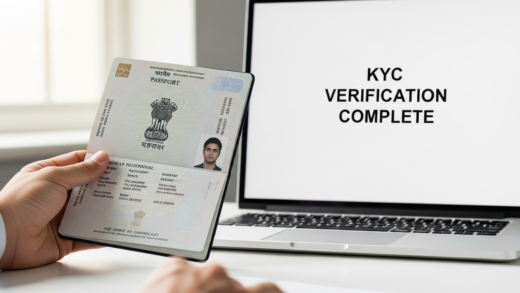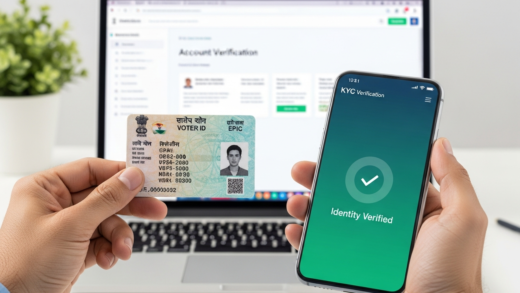
Know Your Customer (KYC) and address verification have become non-negotiable pillars of online gambling compliance, especially for Indian casinos operating in a complex regulatory landscape. These verification processes protect operators from anti-money laundering (AML) violations, fraud, underage gambling, and account abuse. For players in India, understanding which address proofs are acceptable can mean the difference between a smooth account verification and frustrating delays or rejection during withdrawal requests.
This guide focuses specifically on Indian players and India-linked address documentation, merging global casino KYC best practices with the realities of Indian proof-of-address norms. Whether you’re providing an Aadhaar card, utility bill, bank statement, or passport, knowing the exact requirements—validity periods, formatting standards, and name-matching rules—will help you pass verification on the first attempt.
How KYC and Address Verification Work in Indian Online Casinos
Online casinos operating in or serving Indian players follow a standardized KYC workflow that begins at account registration and can extend long after you’ve started playing. The typical process involves four key stages: account creation and initial identity verification, document submission (identity and address proofs), compliance review by the casino’s KYC team, and final approval or request for additional documents.
In the Indian context, casinos must comply with local anti-money laundering directives and verify jurisdiction eligibility. This is why both identity proof and proof of address matter equally. Your identity proof (passport, driving licence, PAN, or voter ID) confirms who you are and verifies your age. Your address proof (utility bill, bank statement, Aadhaar card, etc.) serves multiple purposes: confirming your residential jurisdiction for gambling eligibility, establishing your true residence to prevent bonus abuse and account farming, and fulfilling AML obligations to detect suspicious activity patterns. Some casinos request address verification only at withdrawal; others require it before your first deposit or bonus activation.
Identity Proof vs Address Proof in Casino KYC
Identity proof and proof of address are two separate but complementary components of casino KYC. Identity proof establishes your legal identity and verifies your name, date of birth, and age. Common Indian identity proofs accepted by casinos include your passport (with biometric page), PAN card (Permanent Account Number), driving licence, voter ID (EPIC), and Aadhaar card. These documents are typically valid for several years and confirm your identity across all regulatory frameworks.
Proof of address (PoA), by contrast, confirms your current residential location and typically requires recent issuance—often within the last 3 to 12 months depending on the document type and casino policy. Address proofs are fundamentally different from identity proofs because your address can change, and casinos need assurance that you live where you claim. A utility bill issued six months ago is still reasonably current, but a passport showing an old address may not satisfy casino requirements without a more recent document. Together, identity and address proofs create a complete KYC profile that satisfies both regulatory and operational casino requirements.
When Indian Casinos Request Address Verification
Not all casinos request address verification at registration; many only trigger the PoA requirement at specific moments. The most common trigger is your first withdrawal request—casinos must verify that funds are being sent to an address matching your account profile before processing any payouts. High-value deposits, especially those exceeding certain thresholds, often trigger address verification as part of AML enhanced due diligence. Unusual account activity—such as rapid bonus cycling, multiple failed login attempts, or sudden geographic inconsistencies between your IP location and registered address—can also prompt casino compliance teams to request additional address proofs.
Regulatory checks are another reason. If your casino is subject to periodic audits or jurisdiction-specific KYC reviews, you may receive an email requesting updated address documentation even if you’ve already verified your account. The casino may also request new address proof if your current documents have become outdated (typically after 12 months) or if you’ve updated your profile with a new address. Understanding these triggers helps you prepare in advance and avoid last-minute verification delays when you want to withdraw winnings.
Core Accepted Address Proof Categories for Indian Casino Verification
| Document type | Indian example | Typical casino usage | Validity period |
|---|---|---|---|
| Utility bill | Electricity, water, gas, internet, landline bill | Primary proof; most widely accepted | 3 months from issue date |
| Bank statement | Savings/current account statement from ICICI, HDFC, SBI, etc. | Primary proof; often preferred over bills | 3 months from statement date |
| Aadhaar card | Digital e-Aadhaar PDF or original Aadhaar card | Primary proof; government-issued; highly trusted | 12 months if address is current |
| Passport | Indian passport with address field | Secondary or primary (depending on casino) | 12 months, though address must match |
| Driving licence | Indian state-issued driving licence | Primary or secondary; address-bearing | 12 months |
| Tax/Assessment notice | Income tax assessment order (ITR), property tax bill | Secondary proof; used with primary document | 12 months from issue date |
| Rental/lease agreement | Tenancy agreement with notarization | Secondary; useful for tenants without bills | 6–12 months depending on lease term |
| Insurance document | Home insurance policy, property insurance | Secondary; rarely used alone | 12 months |
Most Commonly Accepted Address Proofs Globally and in India
Casinos worldwide prioritize address proofs that are recent, official, and directly issued by a recognized institution. Across regulated gambling jurisdictions, utility bills and bank statements dominate because they are difficult to forge, regularly updated, and contain clear issuer logos and institutional branding. In the Indian context, this translates to electricity bills (BESCOM, TATA Power, local DISCOMS), water bills, postpaid mobile or landline bills, and internet service provider statements as the strongest utility-based proofs. Indian bank statements from recognized banks—State Bank of India (SBI), HDFC Bank, ICICI Bank, Axis Bank, and others—are equally or sometimes even more acceptable than utility bills because they embed security features and official letterhead.
What makes these documents casino-preferred is their difficulty to counterfeit, institutional backing, and recency. A utility bill issued by a major electricity provider includes the provider’s logo, billing cycle information, meter number, and customer reference details that are hard to replicate. Similarly, a bank statement carries the bank’s name, address, and official formatting. These features give casinos confidence that the document is genuine and that the address is current. Indian government documents like Aadhaar cards and passports also carry high trust value, though their address information may be older.
Utility Bills as Proof of Address for Indian Casino KYC
Utility bills are among the most frequently accepted address proofs for casino KYC in India. Most casinos readily accept the following types:
- Electricity bills – Issued by your state’s Discom (distribution company) or private provider; must show your full name and residential address
- Water supply bills – Issued by municipal corporations or water authorities; commonly accepted as primary proof
- Gas bills – Issued by gas providers like Indraprastha Gas (IGL) or state gas corporations; valid primary proof
- Internet service provider (ISP) bills – From providers like Jio Fiber, Airtel Broadband, ACT Fibernet, etc.; increasingly accepted
- Landline bills – From BSNL or private telecom providers; acceptable but less common than mobile bills
- Postpaid mobile bills – From Jio, Airtel, Vodafone, BSNL; generally accepted, though some casinos prefer utility bills
- TV/cable bills – From cable operators; may be accepted but usually considered secondary to primary utility bills
The critical requirement is that your name on the bill exactly matches your casino account name, your full residential address is clearly printed, the bill is recent (issued within the last 3 months), and the issuer’s logo or branding is visible. Casinos reject bills that are outdated, have your name printed as initials only, or show only a P.O. Box instead of a residential address.
Formatting and Recency Requirements for Utility Bills
Casinos enforce strict formatting and recency rules for utility bills to prevent fraud. The standard recency requirement is that your bill must be issued within the past 3 months—this rule applies to most utility bills and is the industry norm globally. Bills older than 3 months are considered stale and may be rejected unless casino policy explicitly allows for longer periods. When uploading, you must provide the full page of the bill, not a cropped screenshot of just the bill header or amount due. Many players mistakenly upload only the top portion of a bill to protect banking details; instead, use a full-page scan or photograph and let the casino’s compliance team see the complete document. The bill issuer’s logo must be clearly visible—blurry or digitally edited logos trigger automatic rejection.
The image quality matters significantly. If uploading a photograph instead of a PDF, ensure the photo is well-lit, not at an angle, and fully legible. Dark or pixelated images where the address or issuer details cannot be read will be rejected. The safest approach is to download the bill as an official PDF directly from your utility provider’s portal (e.g., your electricity board’s online account or your ISP’s customer dashboard) and upload that PDF to the casino. This eliminates questions about image quality or authenticity.
Common Utility Bill Problems That Cause KYC Rejection
Several preventable mistakes cause utility bill rejections during casino KYC:
- Name mismatch – Your bill is issued to “Rajesh Kumar” but your casino account is registered as “R. Kumar” or “Raj Kumar”; casinos require exact name matching across all documents
- Joint account names without clarity – The bill shows “Rajesh Kumar and Priya Kumar” but only one name matches your casino ID; casinos may reject ambiguous dual-name bills unless you provide a notarized declaration
- P.O. Box or non-residential address – The bill is addressed to your office P.O. Box instead of your home address; casinos specifically require residential addresses to verify player location
- Outdated bills – You submit a bill from 8 months ago, exceeding the 3-month recency window; plan ahead and use recent bills only
- Unreadable or poorly scanned documents – The scan is so dark or blurry that the address or issuer logo cannot be read; always verify legibility before uploading
- Partial or cropped screenshots – You upload only the bill header or portion of a page; always provide full-page documents
Bank Statements and Financial Documents as Address Proof
| Document | Accepted as address proof? | Key conditions | Best for |
|---|---|---|---|
| Savings/current account statement | Yes | Name, address, and bank logo clearly printed; issued within 3 months; no edits or alterations | Primary proof; most casino-preferred |
| Credit card statement | Partial | Only if statement clearly shows issuing bank’s address field; name must match exactly; often rejected as sole proof | Supplementary; rarely sufficient alone |
| Passbook account opening letter | Yes | Must be official letter from bank on letterhead; include account number, holder name, and residential address | Strong secondary proof |
| Retail store credit card statement | No | Not accepted; not issued by regulated financial institutions | Never use for casino KYC |
| Brokerage or insurance statement | Conditional | Accepted only if issued by regulated financial institution and address is current and verified | Supplementary, rarely primary |
Bank statements are often preferred over utility bills by casinos because they represent direct financial records maintained by regulated institutions and are inherently harder to counterfeit. An Indian savings account statement from SBI, HDFC Bank, ICICI Bank, or Axis Bank carries institutional credibility and typically includes embedded security features. When submitted as address proof, your bank statement should clearly display your registered name (matching your casino ID exactly), your residential address, the bank’s official logo and letterhead, the statement period (e.g., “Statement for the period January 1 to January 31, 2024”), and ideally your account number partially masked for security. Statements dated within the last 3 months are standard; some casinos accept statements up to 6 months old if explicitly stated in their KYC policy.
Credit card statements are sometimes accepted but come with caveats. A credit card statement from a major bank does show your name and billing address, but some casinos view it as less reliable than a primary bank account statement because the address may be a mailing address rather than your current residence. Insurance company statements or brokerage account statements may be accepted by some casinos if they are issued by a regulated institution, but these are typically considered secondary documents and are insufficient on their own.
How to Prepare a Bank Statement for Casino Verification
- Download the official PDF – Log into your bank’s online portal and download your most recent statement directly; do not screenshot or photograph the statement
- Verify that your address is fully visible – The statement must clearly show your registered residential address in full; if the address is truncated or broken across lines, contact your bank to request a reprint or export with full address details
- Ensure no edits or alterations – Do not crop, highlight, blur, or edit any part of the statement; submit the complete, unaltered document as issued by the bank
- Confirm the statement date is recent – Your statement should be dated within the last 3 months; check the statement period at the top of the document
- Double-check name matching – Your full name on the bank statement must exactly match your casino account name; if there’s any discrepancy (abbreviations, spelling, middle names), contact your bank and casino support before uploading
- Review the file format – PDF is preferred; if you must upload an image, ensure it is a clear, full-page photograph with no glare or shadows
Government-Issued Indian Address Proofs Used in Casino KYC
Government-issued documents carry inherent credibility in casino KYC because they are issued by recognized authorities and are notoriously difficult to forge. Aadhaar cards, Indian passports, driving licences, and voter IDs all feature government branding and embedded security features. However, government documents sometimes present challenges: they may contain older address information, especially if you moved after obtaining the document but haven’t updated it. For this reason, casinos often request government documents as a primary identity proof but require a secondary recent document (like a utility bill or bank statement) to confirm your current address.
The Permanent Account Number (PAN) card is issued by the Indian income tax department and serves as a primary identity proof. However, PAN cards do not contain residential address information—they only show your name, date of birth, and identification number. Therefore, PAN alone cannot satisfy address proof requirements, though it is excellent as an identity proof to accompany an address document.
Using Aadhaar Card as Address Proof for Indian Casinos
- Aadhaar cards are widely accepted – Aadhaar, India’s unique biometric identification system, is increasingly recognized by casinos as both identity and address proof because it is government-issued, secure, and regularly updated
- Address must be current – If you moved after receiving your Aadhaar card, you can update your address through the UIDAI (Unique Identification Authority of India) portal; ensure your Aadhaar address matches your casino registration
- Use e-Aadhaar PDF – Digital e-Aadhaar (a password-protected PDF downloadable from the UIDAI portal) is more secure and widely accepted than photocopied physical cards; many casinos explicitly request e-Aadhaar for privacy and security
- Privacy and data protection – Sharing Aadhaar with online platforms carries privacy concerns; use reputable casinos and consider whether an alternative address proof (utility bill, bank statement) might better protect your personal data
- Recency window – Aadhaar is generally accepted if your address on file is current, even if the card itself was issued 10+ years ago; however, if you’ve moved since receiving the card, you must have updated your Aadhaar address
Passport, Driving Licence and Voter ID as Supporting Address Proof
Indian passports contain residential address information printed on the biographical page. This makes them potentially useful for casino address verification, though casinos often treat passport addresses as secondary because they may be outdated (passports are valid for 10 years). If your passport address matches your current residence and you’ve updated your passport information recently, it can serve as a primary address proof; however, most casinos prefer a more recent document like a bank statement or utility bill alongside your passport to confirm you still live at that address.
Indian driving licences (issued by state Road Transport Authorities) display your residential address and are valid for 5–15 years depending on the licence class. They are generally accepted as address proofs, though the address may be old if you haven’t renewed your licence after moving. Voter ID cards (EPIC issued by the Election Commission) similarly show residential address and are valid indefinitely but may reflect outdated information.
The practical advice is to use government-issued documents as identity proof and pair them with a recent utility bill or bank statement for address verification. If your passport, licence, or voter ID address matches your current residence and is reasonably recent, you can submit it as your primary address proof; otherwise, treat it as supplementary and provide a more current utility or financial document.
Rental Agreements, Insurance and Other Secondary Address Proofs
| Document | Accepted by casinos? | Mandatory details | Risk of rejection |
|---|---|---|---|
| Rental/lease agreement | Often | Leasee name, property address, lease term, signatures, notarization | If unsigned, undated, or no landlord signature; if term has expired |
| Home insurance policy | Conditional | Policyholder name, property address, policy number, issue date, insurer letterhead | If address is mailing address only; if older than 12 months; if not notarized |
| University/hostel housing letter | Sometimes | Student name, address, institution letterhead, period of stay, official signature | If dated beyond current enrollment period; if from informal housing |
| Property tax/municipal assessment | Yes | Property owner/taxpayer name, address, tax ID, issuer logo, recent issue date | If address doesn’t match account; if assessment is outdated |
| Society/association letter | Conditional | Resident name, address, society name, secretary signature, date of residence confirmation | If unsigned or informal; if society is unregistered |
Rental agreements are valuable address proofs for players who rent rather than own their homes. A typical Indian rental (tenancy) agreement includes the lessee’s name, property address, monthly rent, lease duration, and signatures of both lessee and lessor. For casino KYC purposes, the agreement should be recent (ideally within the last 6–12 months if the lease term is still active) and preferably notarized or registered to carry legal weight. Some casinos accept notarized rental agreements as primary proof; others request a rental agreement plus a recent utility bill or bank statement to confirm you still live there. The risk with rental agreements is that if your lease has expired, the agreement is no longer valid proof of current residence.
Home or property insurance policies sometimes serve as address proof, though casinos treat them cautiously because the address on the policy may be a mailing address rather than the insured property. An active home insurance policy clearly stating the property address, policyholder name, and policy issue date can support your KYC submission, but it is rarely accepted as sole proof. University housing letters or college hostel confirmation letters can satisfy address requirements for students living on campus; they must be on official institutional letterhead, signed by a housing administrator, and indicate your current period of residence.
Society/association letters or resident welfare association (RWA) certificates confirming your residence in a particular apartment building or housing complex are sometimes accepted, though they are considered weak secondary documents because they are often informal and lack the institutional authority of government or financial institution documents. Property tax bills (municipal corporation assessments) from your local municipal authority carry government weight and can function as primary address proof if they show your name clearly and the property address matches.
When to Use Secondary Address Proofs Instead of Utility Bills
Players who do not receive utility bills in their own name—students living in college hostels, seniors living with adult children, NRIs maintaining Indian addresses, or dependants in joint family homes—can leverage secondary documents creatively. A student without an electricity bill in their name might submit a notarized hostel residence certificate from the university plus their ID proof and a bank statement showing the registered address. A senior living with their child might submit a utility bill in the child’s name plus a notarized declaration confirming they reside at that address. Before submitting secondary documents, contact the casino’s KYC support team and ask explicitly which combinations of documents they accept for players in your situation. Most reputable casinos are familiar with these edge cases and have established alternative pathways.
Special Situations: NRIs, Shared Addresses and Family Proofs
Certain player circumstances—Non-Resident Indian (NRI) status, living with family members without independent utility accounts, or shared household arrangements—present KYC complications that require strategic document selection and sometimes supplementary evidence.
- NRIs maintaining an Indian address – If you’re an NRI holding an Indian casino account and maintaining a registered Indian address (e.g., parents’ home, a property managed by family), provide an Aadhaar card or Indian bank statement showing that address; many casinos accept this as valid proof
- Dependants without independent utility accounts – If you live with your parents or spouse and utilities are in their name only, submit their utility bill plus your ID proof and a notarized declaration confirming your residence at that address; ensure the declaration is signed by a notary and both parties
- Shared household accounts – If a utility bill shows multiple residents’ names (joint account), highlight your name on the document and provide an affidavit or letter from the primary account holder confirming you are an authorized resident
- Temporary or recent moves – If you’ve just moved and don’t yet have a new utility bill in your name, submit your previous address proof plus a notarized declaration of your new address, or request a temporary address confirmation letter from your landlord or society
- Address updates with the casino – If you’ve moved and your casino account address is outdated, update your profile with the new address first, then submit the new address proof; mismatches between account and document address cause automatic rejection
- Cross-border considerations – Some casinos flag accounts where the registered address is in India but payment methods or login IP locations suggest a different country; if you’re an NRI, be consistent about whether you’re using your Indian address or current residence address
NRIs Using Indian Address for Casino Verification
Non-Resident Indians maintaining casino accounts often face unique verification challenges because they may live outside India but retain an Indian address for family, business, or banking purposes. If you’re an NRI using an Indian address for your casino account, maintain at least one current Indian address proof—an Aadhaar card with updated address, a recent Indian bank statement, or a utility bill issued to your Indian address (potentially in a family member’s name with a notarized declaration of your residency). Casinos may scrutinize NRI accounts more carefully to assess cross-border gambling legality and source of funds, so transparency is essential.
Ensure your payment methods (credit cards, bank transfers, e-wallets) are consistent with your registered address. If your casino account shows an Indian address but you’re funding it with a payment method from a different country, you may trigger additional verification or account restrictions. The safest approach is to use Indian payment methods aligned with your registered Indian address, or to clearly disclose your NRI status to casino support and ask for guidance on acceptable documentation.
Players Without Address Proof in Their Own Name
- Request a family member’s utility bill plus your ID proof – Submit an electricity or water bill in your parent’s or spouse’s name together with a notarized declaration (on stamp paper, signed by a notary public) confirming you reside at that address
- Obtain a rental agreement letter from your landlord – If you’re renting informally and have no written lease, ask your landlord to provide a notarized letter on their letterhead confirming your residency, the rental period, and the property address
- Contact the casino’s KYC team before submitting – Explain your situation (student, dependent, temporary resident, etc.) and ask which document combinations they will accept; some casinos have explicit policies for dependants or non-bill holders
- Use Aadhaar as your primary address proof – If you’ve registered your Aadhaar card with your current address (even if utilities are in someone else’s name), Aadhaar may satisfy address requirements without requiring additional documents
- Avoid submitting mismatched documents – Do not submit a parent’s address proof while your ID shows a completely different address; all documents should be reasonably consistent, with clear explanations (such as a notarized declaration) if addresses differ
How to Avoid Address Proof Rejection and Pass Indian Casino KYC Smoothly
| Action | Positive impact on KYC | Risk if ignored |
|---|---|---|
| Submit documents issued within 3 months (utility bills) or 12 months (government ID) | Fast approval; no need to resubmit outdated docs | Automatic rejection; casino will request new documents and delay your withdrawal |
| Ensure exact name matching across all documents and your casino account | Smooth verification; no queries about identity discrepancies | KYC rejection due to name mismatch; potential account suspension |
| Choose utility bills or bank statements over secondary proofs when available | Highest approval rate; casinos prefer primary institutional documents | Slower review; higher chance of rejection or request for additional docs |
| Use full-page documents (no cropped screenshots) with clear logos and visible text | Clear review; faster decision by compliance team | Rejection due to incomplete or illegible documents; resubmission required |
| Verify address consistency across all submitted documents | No follow-up questions; single-step approval | Rejects if one document shows different address; requires explanation or new docs |
| Download PDFs directly from issuer portals instead of photographing documents | Professional presentation; reduced fraud risk | Image quality issues; blurry or angled photos may be rejected |
| Update your address with the casino before submitting proof documents | Account profile matches documentation; seamless verification | Mismatch between account address and proof address causes rejection |
Creating a systematic approach to address proof submission dramatically improves your KYC success rate. The most common rejections stem from avoidable mistakes: submitting outdated documents, uploading cropped screenshots instead of full pages, providing documents where names don’t match your account, or failing to verify document legibility before upload. By following a disciplined checklist before every submission, you can eliminate these pitfalls.
Step-by-Step Checklist Before Uploading Address Proof
- Verify the document’s issue date – Check that your utility bill or bank statement was issued within the last 3 months (or your government ID within 12 months); if outdated, obtain a current version before uploading
- Confirm your name matches exactly – Your full name on the address proof must match your casino account name exactly (no abbreviations, no spelling variations, no middle names added or dropped unless they’re on your ID)
- Confirm the address matches your casino profile – The residential address on the document must match the address you’ve registered in your casino account; if you’ve recently moved, update your casino profile first
- Assess image quality and completeness – If submitting a photograph, ensure it is well-lit, not at an angle, shows the full page, and all text (address, issuer logo, date) is clearly legible; when in doubt, download the official PDF instead
- Check the issuer’s logo and institutional details – Verify that the bank logo, utility company logo, or government seal is clearly visible; blurry or edited logos trigger fraud alerts
- Verify consistency across multiple documents – If submitting both identity and address proof, ensure names match and addresses are aligned; if names differ across documents (e.g., married name on one document), provide a marriage certificate or notarized declaration explaining the discrepancy
- Review file format and size – Most casinos prefer PDF files; if uploading an image, ensure it is JPG or PNG under 10 MB; avoid oversized files that may fail to upload
By approaching address proof submission methodically, you transform a potential compliance hurdle into a routine, low-risk process. Indian casinos increasingly recognize the diversity of documentation among their player base—renters, dependants, NRIs, young professionals—and most have established streamlined pathways for non-standard situations. Proactive communication with casino support, accurate document preparation, and clear understanding of validity periods and name-matching requirements ensure you pass verification smoothly and access your winnings without delays.